Retail Security London
SIA licensed. BS7858 vetted. Greater London.
- 15-min response
- Directly employed
- DBS checked
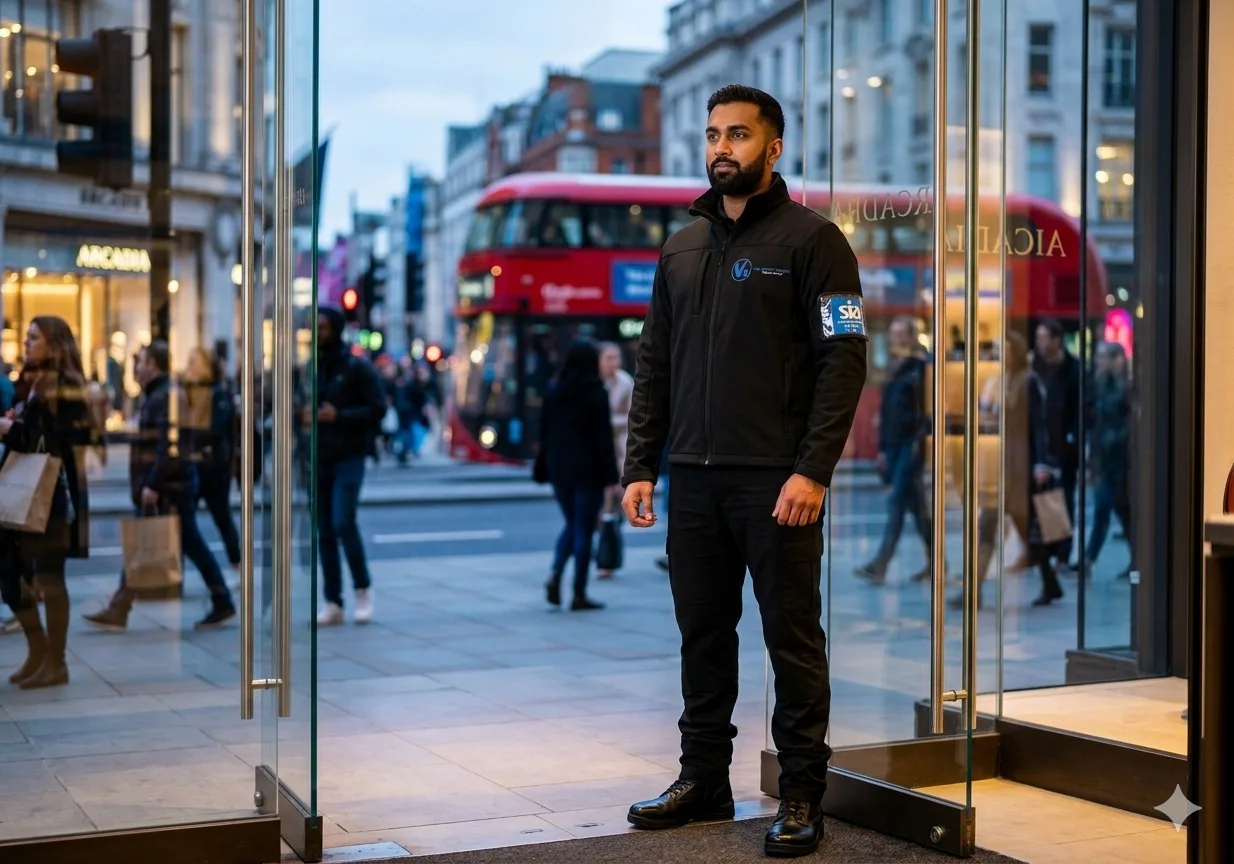
Vigil Security Services works exclusively with businesses across Greater London. Every officer is directly employed by Vigil Services Ltd — SIA-licensed, BS7858 vetted, and consistently assigned to your contract.

Our services
How it works
 1
1Contact Vigil
Call or complete the enquiry form and we will respond as soon as possible.
As soon as possible
 2
2Site risk assessment
We visit your premises, assess your security requirements, and produce a written specification.
Within 48 hours
 3
3Officers deployed
Your directly employed, SIA-licensed team begins on your agreed start date.
As agreed
Why London businesses choose Vigil

SIA-licensed officers
Every officer holds a current SIA licence in the appropriate category — Security Guarding or Door Supervision.
BS7858 vetted
Full 5-year employment history check and ID verification before deployment.
Digital shift reports
Timestamped shift logs and incident reports after every deployment.
Regulatory compliance
Frequently asked questions
Retail security provides SIA-licensed officers stationed at shops to deter shoplifting, prevent theft, manage aggressive customers, conduct bag checks, and respond to incidents. Officers are trained in loss prevention, conflict de-escalation, reasonable force, and PACE 1984 detention procedures. Retail security is essential for department stores, fashion retailers, supermarkets, electronics stores, and shopping centres experiencing theft or requiring visible deterrence during peak trading.
Yes, under Section 24A of PACE 1984. SIA-licensed retail security officers can make a citizen's arrest if they have reasonable grounds to believe theft has occurred. Officers must use only reasonable force, inform the detained person of the arrest grounds, and hand them to police. All detention incidents are documented with witness statements and CCTV evidence. Unlawful detention can result in civil claims, so Vigil officers receive extensive training on legal procedures and evidence requirements.
Uniformed officers wear branded security uniforms and provide visible deterrence at store entrances or high-risk areas. Store detectives wear civilian clothing and covertly observe suspected shoplifters to gather evidence before making an approach. Uniformed officers prevent opportunistic theft; store detectives target repeat offenders and organized retail crime. Both must hold SIA licences. Many retailers use a combination for comprehensive loss prevention.
Staffing depends on store size, product mix, theft risk, and trading hours. Small stores (under 2,000 sq ft) typically need 1 officer during peak hours. Mid-sized stores (5,000–10,000 sq ft) need 1–2 officers. Large stores or high-value goods retailers may need 2–3 officers plus plainclothes detectives. We conduct free site assessments to review premises layout, historical theft data, and CCTV coverage, then recommend appropriate staffing with documented rationale in the quotation.
Absolutely. Many retailers increase security during peak trading when footfall and theft risk are elevated. Vigil provides flexible deployment for Black Friday, Christmas trading (November–January), sales events, and promotional periods. Short-term contracts (1 week to 3 months) available without long-term commitment. Booking 4–6 weeks ahead recommended for peak periods. Existing clients can temporarily increase officer numbers with 2 weeks' notice.
Yes. Vigil provides shopping centre security including patrol officers for common areas, CCTV monitoring, anti-social behaviour management, and incident response in tenant stores. For multi-tenanted centres, we offer consolidated security under a single contract covering common areas and selected tenant stores, with unified reporting to centre management. Officers handle opening/closing procedures, manage deliveries, assist shoppers, and coordinate with emergency services.
Ready to get started?
Every query answered within 15 minutes. No commitment required.
Vigil Security Services is a trading name of Vigil Services Ltd · Reg. 11756806